






Photo credit: NASA
Vertical Motion Simulator
NASA
Bringing Clarity to the World’s Largest Motion Simulator
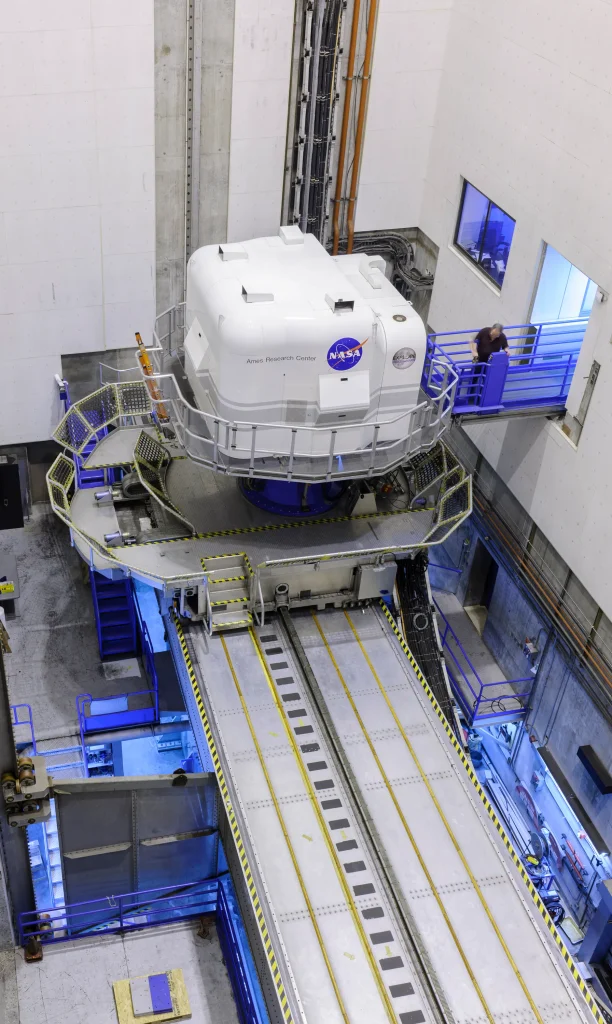
NASA’s newly updated Vertical Motion Simulator (VMS) is housed in a ten-story warehouse at Ames Research Center in California’s Silicon Valley. It is the largest motion-based flight simulator on Earth. Its motion platform can travel as much as 60 feet vertically and 40 feet horizontally, providing enough freedom of motion to replicate the real-world feel of various applications from helicopter hover to a lunar lander’s final descent. Displays & Optical Technologies, Inc. is proud to have manufactured five precision collimating mirrors that support the out-the-window visual systems used across VMS’s interchangeable simulator cabs.
Motion alone does not make simulation believable. The pilot’s eyes have to be able to be convinced as well. Collimating optics make out-the-window imagery (light rays) generated by
VMS’s image generator align as they would if a pilot were seeing the images from very far away when they are really being reflected from under 10’ from the eyepoint. These images are
correctly displayed so that the human eye sees them the same way a horizon or runway would appear to the pilot in flight. Without that correct optical presentation, a pilot’s eyes would need to constantly refocus on a screen just a few feet away from their eyes, breaking the illusion of flight and introducing visual cues that don’t match the vehicle’s actual motion. People often call out “simulator sickness” as the negative result of lesser display systems and properly coordinated sim motion cues. Correct optical geometry across the collimating display is what allows NASA’s motion and IG systems to work together as a single, convincing sensory experience.
Watch NASA’s Video about VMS Simulator
Learn more about the Virtual Motion Simulator at the Ames Research Center in this video created by NASA.
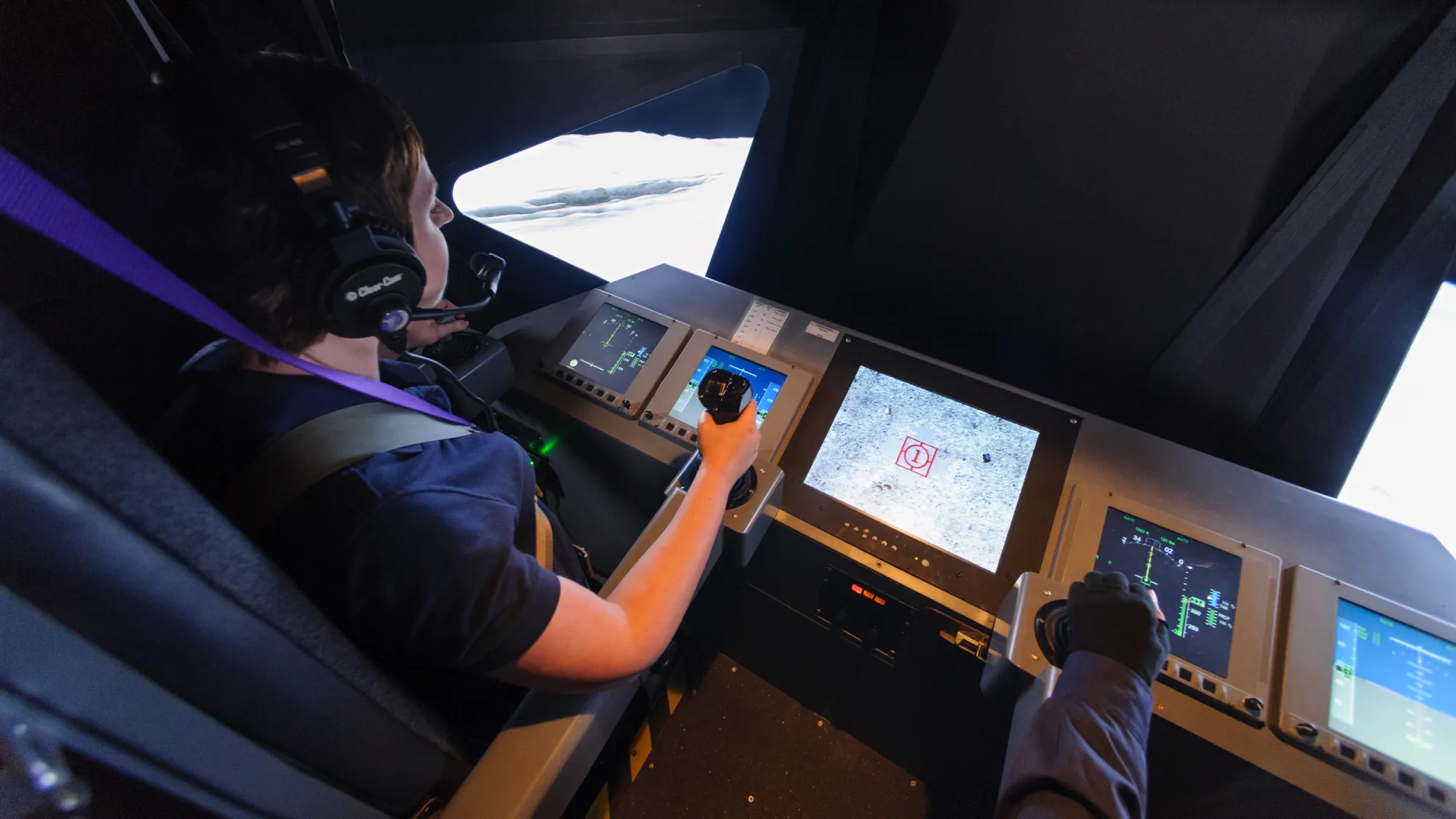
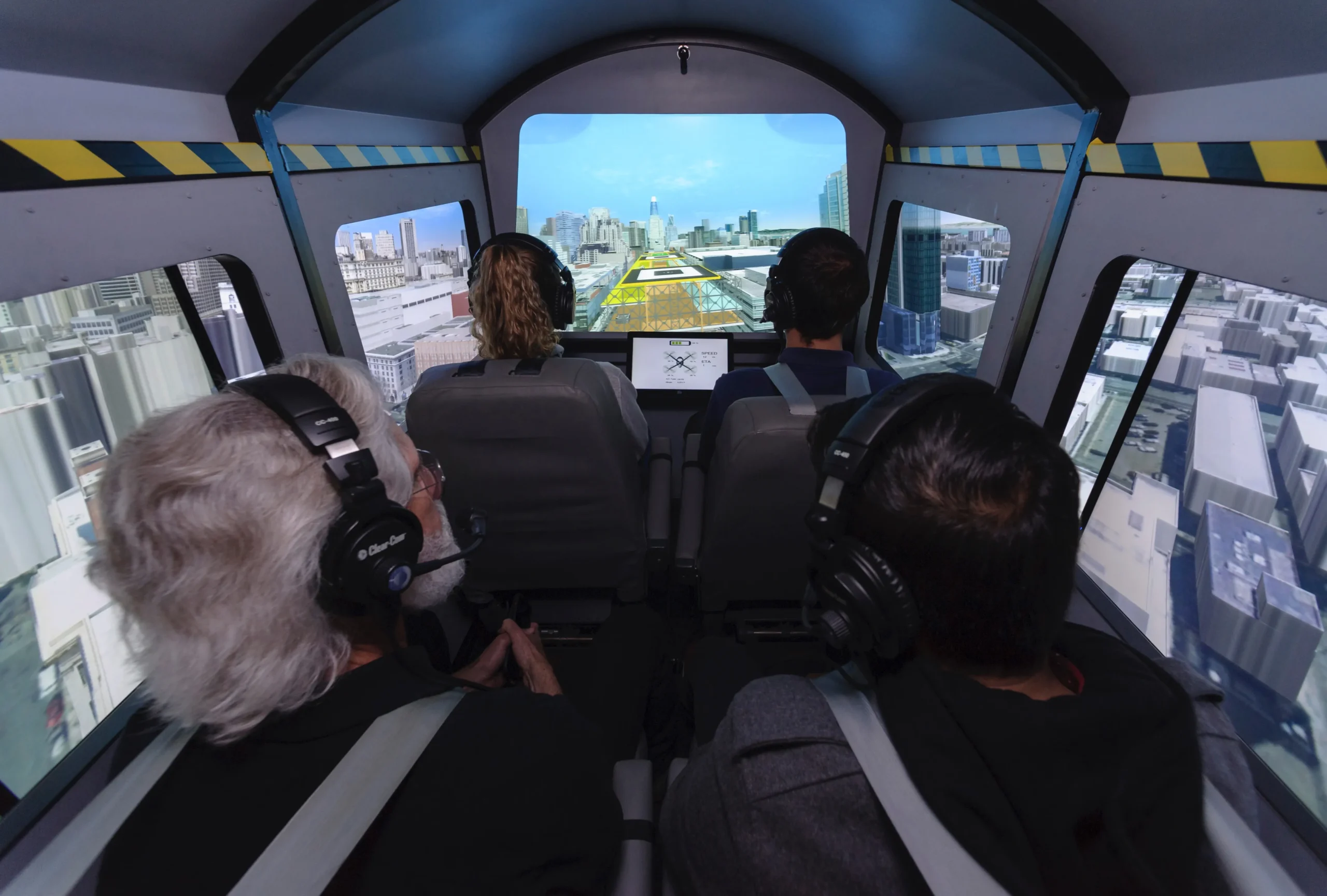
Each of the five mirrors were meticulously manufactured to exacting radius matching specs and the tight optical quality and accuracy needed for NASA’s diverse flight research. This precision is paramount to the efficacy of the full range of vehicles that the VMS simulates, including single seat fast jets, tilt-rotor aircraft, the Space Shuttle, and lunar landers. It also is pertinent to the operation of the facility’s newer work supporting air taxi and Advanced Air Mobility research, where NASA is studying the ride quality of vertical-takeoff passenger aircraft over cities.
We’re honored to have been chosen to manufacture these massive collimating mirrors for the VMS. They will be an integral part of the training and research experience for many years to come. Their research will contribute to the direction and successes of the aircraft and pilots that fly this simulator. And will add to an essential role that is now helping demonstrate what a comfortable ride in an urban air taxi will feel like. The realism that researchers and training pilots rely upon starts with getting the fundamentals (motion, graphics, and optics) correct before they take to the skies.
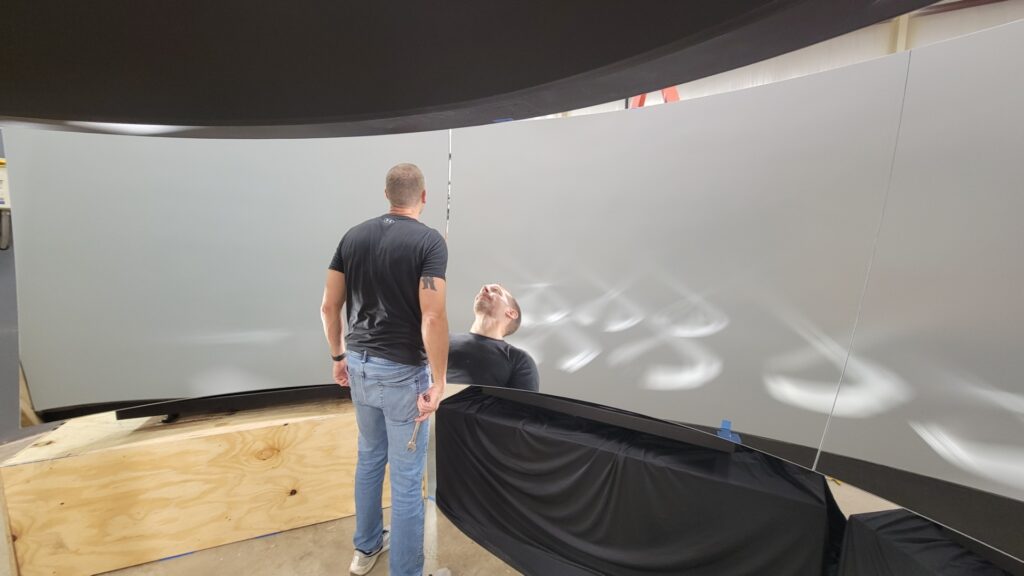
DOTI’s Vice President – Tyler Hehn – helping assemble a collimated system for an on-site test.
Gallery
Articles
Vertical Motion Simulator
NASA
Air Taxi Ride Quality
NASA
“Flying” a Lunar Lander, Right Here on Earth
NASA
What is the Vertical Motion Simulator?
NASA